
What is Finch?
Many parents approach us at various times curious as to how exactly we are able to generate such a positive response in their child:
“I thought my kids didn’t like writing. Now, they actually want to come! What is your secret — your magic recipe?”
Of course, we love to receive these kinds of questions, and our answer is always the same—our magic recipe is our teaching method. It’s an active endeavour, motivated by our own endless passion for language.
At the heart of our Finch philosophy is years of dedicated research by the National Council of Teachers of English (NCTE) pioneered by writing gurus, such as Peter Elbow, Donald Graves, Nancy Atwell and others. It has been evident for a long time that many kids struggle to write. Schools often can’t implement effective teaching philosophies because of systemic and practical barriers. Classes are too big, too short. Curriculums are rigid and lack individualization. And more than anything, the whole system ladders towards impatient assessment, where the focus is on the product (grades, tests) rather than the process itself (transferable skills). As a result, even the kids who learn to be “good” at playing the game of school, cannot apply their skills to the outside world. After all, life does not resemble a standardized test. It’s a vast, open meritocracy that requires independent thinking, adaptability, emotional intelligence, and purposeful expression. Our goal is not only to make better writers, but to better equip our students for life as a whole.
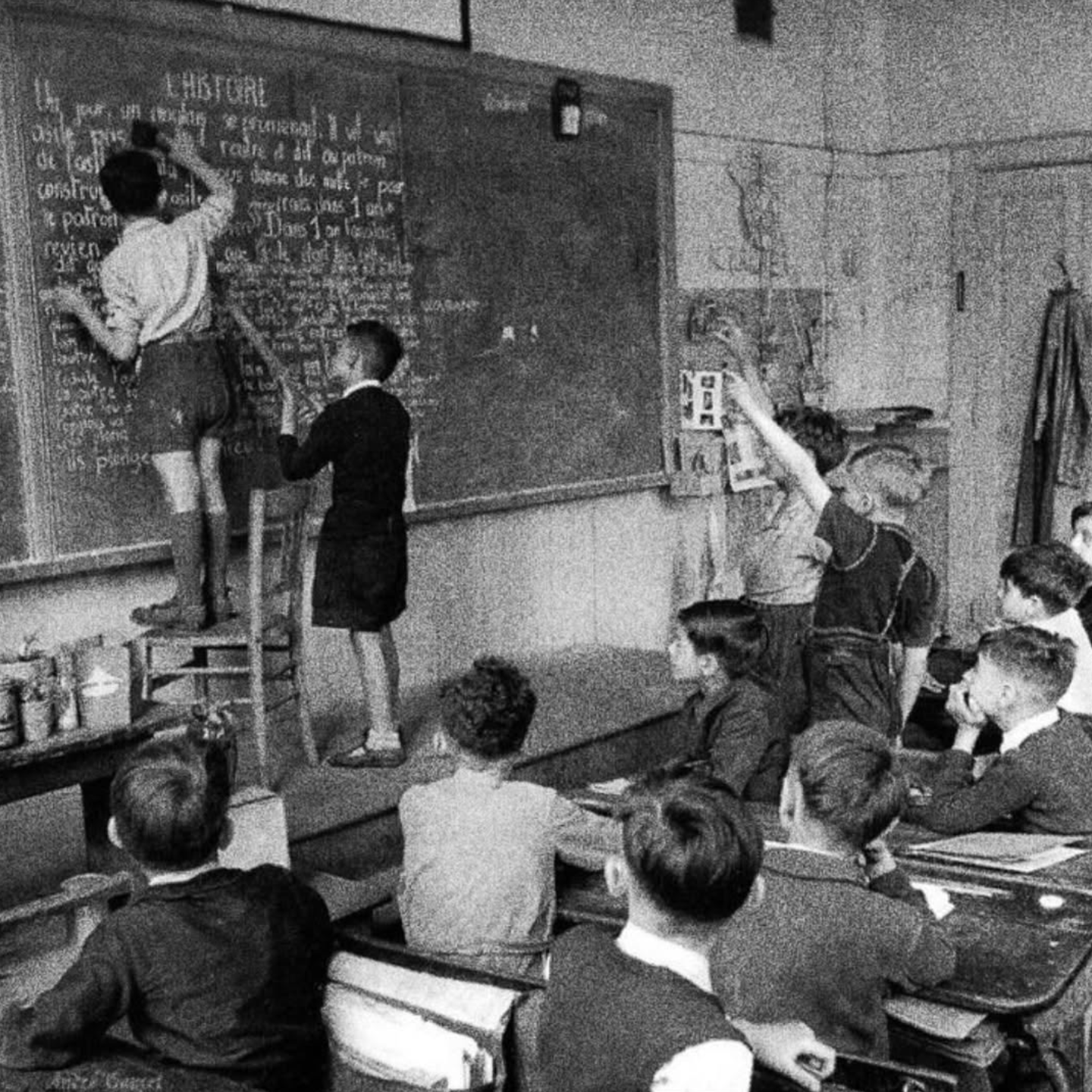
So, how do we do this?
First of all, whether a child already writes frequently or has never picked up a pen, we treat all of our students as writers from the start. Children innately want to write. Our job as instructors is to create the conditions for them to do so freely and confidently. Each student is greeted with their own online journal on Day 1. A blank page is the heart of a writer’s life. A place, literally and figuratively, to collect seeds of insight, experiment, play, make meaning. Ownership drives investment.
By writing continuously without stopping, editing or judging we bypass the internal censor, letting our ideas flow. Oral rehearsal and talk are essential precursors to writing, especially for young children. Kids often need to talk through ideas, draw, or list before putting words on paper. Prewriting isn’t just a quick brainstorm. It’s an extended phase of discovering what they have to say. Writing is not simply about depositing existing thoughts, it’s a medium for thinking itself. Writing is “thinking” on paper.
However, writing is not enough by itself. Students need instruction and scaffolding and modeling. Our weeks are curated to guide kids along a writing path. We provide frequent teacher-student and peer conferences focused on moving the writing of each student forward independently. We also encourage (though never force) sharing aloud in order to develop their "writer's ear". Reading aloud helps students build rhythm and flow, and develop voice/style.
Every child has a unique starting point. Writing is not like math. It isn’t linear or sequential. It’s fluid and exploratory. We are careful to balance freedom with craft instruction, so that students see writing as a decision-making process, not a product-based aim. All of our exercises are meant to expand kids’ thinking, challenging them to broaden their minds and build their character.

Key Tenets of our Method:
Free Writing—starting with personal, inquiry-based, free writing is the most natural and effective path to developing literacy, and allows students to build confidence and trust in their language.
Non-Cumulative Curriculum—we create a flexible curriculum that is non-sequential and free from grading metrics, rubrics, or testing. This dissuades competition in light of exploration, and ensures that students are writing for a specific audience (even themselves), instead of trying to produce the “correct” answer.
Mentor Texts—writers learn to emulate when they’re exposed to curated literary examples displaying a range of author choices.
Intrinsic Motivation—the greatest accelerant to learning is an authentic interest and self-motivation for a subject because it’s fueled by genuine curiosity. So, our goal is always to cultivate a lifelong passion for writing in each of our students.
Process vs. Product—focusing on the cyclical process of writing (brainstorming, drafting, revising, and editing) rather than the final, polished text helps students learn to regard writing as a broad and fundamental tool for communication in life, rather than simply meeting a school’s standard of assessment.
Dedicated Writing Practice—like any skill, students need to maintain a regular writing habit which is not constrained by a given topic or template. Over time and with consistent practice, young writers are able to sustain focus and expand their thoughts rather than short-burst efforts typically producing vague or generalized plots.
Student Choice/Agency—honoring the student’s decisions and ideas, allowing them to be self-led, and providing guided feedback rather than rigid instruction, helps them develop their own authentic voice, assume ownership of their work, and engage more willingly with the writing process.
Logical Flow—students’ logic and structure should be evaluated based on the effectiveness of the way their message is conveyed to the relevant audience, and not based on how it fits into a prescribed formula/rubric, like the five-paragraph essay. Formulas and rubrics rob the student of independent thinking, stifle creativity, and limit engagement.
Transferable Writing Skills—people who engage in free writing regularly develop strong emotional literacy and learn how to tailor their communication for different purposes and audiences, as is necessary in every facet of life, well beyond the classroom.
Culture of Practice—because writing is inherently social, providing a safe, inclusive, community in which teachers are active members is essential for writing development. Writing for a trusted community rather than writing for a grade allows students to experiment with new ideas and language without the immediate fear of being corrected or judged.
Writing Mechanics—many parents are concerned primarily with the basic visual elements of their child’s writing (punctuation, capitalization, spelling, formatting). Understandably, they think they want worksheets and drills and progress reports to iron out errors. However, mechanics are actually learned best in the context of authentic writing, not through isolated exercises. Students learn that they are tools for clarity instead of stagnant rules.

Why School Often Isn’t Enough
How writing is conceptualized has consequences, especially in educational settings. Yet, despite decades of research and scholarship on writing instruction and assessment, misperceptions about writing and its purpose in schools persist. The key components of our philosophy are derived from the principles of the National Council of Teachers of English (NCTE) and Peter Elbow. Schools often struggle to implement this philosophy, despite its research-based support, due to systemic and practical barriers like:
Time Constraints—NCTE-aligned instruction requires substantial, uninterrupted time for students to write and think, which is rare in a typical regimented school day.
Scripted Curricula—to ensure consistency across grade levels, many districts mandate prepackaged or scripted programs, which often follow a rigid pace and a narrow definition of “good” writing according to specific, formal, academic demands. Writing is also often siloed to English Language Arts (ELA) classes, neglecting the need for writing in science, history, social studies, and other disciplines.
Ease of Grading—it is far easier to grade a multiple-choice grammar quiz or a formulaic essay than it is to provide deep, meaningful feedback on a student's unique, creative project. Teachers tend to focus on "fixing" errors in grammar and spelling too early, which hampers the writing process and discourages student confidence and creativity.
Over-Reliance on Standardized Testing—because school funding and graduation can depend on these scores, teachers often feel forced to prioritize templates, which fail to prepare students for complex, authentic writing tasks.
Typical Workshop Structure:
Our summer workshops are designed for avid writers and non-writers alike, providing creative inspiration, skill-building, and a welcome community for personal expression. By participating in a summer course, each student will be able to submit to the upcoming Finch Fall Magazine.
Warm-Up:
Because writing is inherently social and personal, providing a safe, inclusive community is essential. Each workshop kicks off with a light, engaging warm-up to get everyone’s writing muscles moving, followed by a discussion of ideas to spark thinking.
Read:
Writers best learn to emulate when they’re exposed to curated literary examples displaying a range of author choices. Each class, we introduce a curated mentor text, which spotlights a specific technique, style, lesson within the theme of the class.
Spark:
Each reading example is paired with a writing prompt (developed by writers themselves) designed to be fresh, focused, and inspiring, while honoring the students’ decisions and ideas, allowing them to be self-led and develop their own agency and authentic voice.
Write:
Like any skill, students need to maintain a regular writing habit. During an extended writing period, instructors provide coaching focusing on the cyclical and experimental process of writing (brainstorming, drafting, revising, and editing) rather than rigid instruction.
Share:
We then group together to share our pieces aloud. While sharing is always optional, most students naturally participate as they grow more comfortable in the culture of feedback. Dictating not only builds confidence, but also helps students develop a “writer’s ear,” improving their language and sentence flow.
Wrap-Up
To further build continuity and engagement, we finish each class with a final reading/writing prompt so that students leave excited and ready for the next day ahead!
Relevant Articles/Books:
Professional Knowledge for the Teaching of Writing (2016): Outlines 10 key concepts, including the idea that writing is a tool for thinking and that "“everyone has the capacity to write".
NCTE Beliefs about the Teaching of Writing (2022): A concise list of 11 core beliefs, such as "writing is a process" and "writing and reading are related".
The Students' Right to Write (2022):Asserts that students have a right to see themselves as writers and to use their own language and identity in their work.
Writing Instruction in School (2022): Advocates for process-oriented instruction over product-oriented (test prep) models and emphasizes culturally sustaining practices.
Elbow, Peter. Writing with Power: Techniques for Mastering the Writing Process. 2nd ed., Oxford University Press, 1998.
Elbow, Peter. Writing without Teachers. 2nd ed., Oxford University Press, 1998.